If you’ve spent any time around apparel printing lately, you’ve probably noticed that DTF printing is everywhere right now, and for good reasons! It’s one of the easiest ways for a small business to get into decorating garments without needing a ton of space, setup time or experience. But once you start looking at equipment, things can get confusing pretty quickly. There are a lot of options out there, and they all claim to be the fastest or the best. The reality is, most printers aren’t looking for the fastest machine, they’re looking for something that runs consistently, produces quality prints and doesn’t create headaches.
What Is the Best DTF Printer for a Small Business?
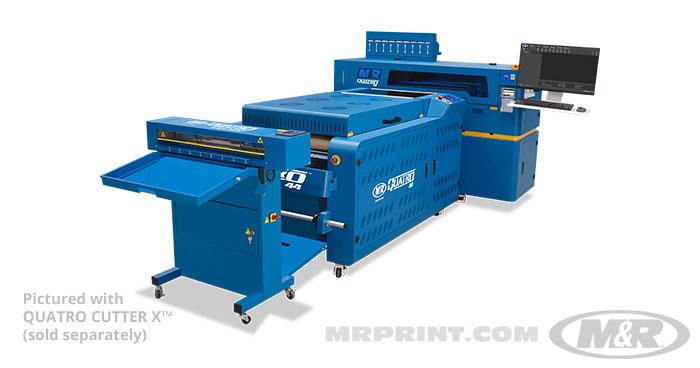
The best DTF printer for a small business is one that delivers consistent print quality, reliable day-to-day performance, ease of use for the operator and strong manufacturer support when you need it. A lot of growing shops end up focusing less on specs and price and more on whether the machine can handle real production without constant issues. That’s why systems like the M&R Quatro™ DTF lineup tend to come up in conversations. They’re built with production in mind, not just entry-level appeal.
Why So Many Small Shops Are Starting with DTF
DTF really fills a gap in the decorating world. Screen printing is still the best option for long runs, but it takes setup time, screens, and experience. DTG is great for cotton, but once you get into polyester or performance wear, things can get tricky. DTF sits right in the middle. You print onto film, apply powder, cure it, and press it onto the garment.
That gives you the ability to decorate:
- Cotton
- Polyester
- Blends
- Performance fabrics
- Tote bags and canvas goods
- Hats (with the right application setup)
- Backpacks and duffel bags
- Aprons and workwear
- Mousepads and fabric accessories
- Koozies and soft promotional items
- Pillow covers and home textiles
For a small shop, that flexibility is huge. You can take on short runs, custom orders, online merch, and team apparel without overcomplicating your process.
What Actually Matters When Buying a DTF Printer
Reliability matters more than speed. Print quality matters. Support matters. There are plenty of machines out there advertising high speeds at low cost, but speed doesn’t help much if the printer is constantly down. Another thing that often gets overlooked is who’s supporting the equipment after it’s installed. With systems like the M&R Quatro, you’re not relying on general digital printing support, you’re working with certified technicians who are trained specifically on the Quatro system. That level of focused support can make a big difference when it comes to troubleshooting, maintenance, and keeping production running without unnecessary downtime. Most small businesses don’t need the fastest printer on the market; they need one that runs every day without issues.
Print Quality Still Matters
At the end of the day, your customer doesn’t care what process you use, they care about how the print looks and how it feels. A good DTF system should consistently deliver:
- Bright, accurate colors
- Strong ink coverage
- Durable prints that hold up over time
- Perfect registration
But there’s another piece that gets talked about a lot with DTF and that’s hand feel. DTF has a reputation for feeling heavier or more “plastic-like” compared to other print methods, especially when too much ink or powder is used. And to be fair, that reputation didn’t come out of nowhere. A lot of early DTF setups (and even some current ones) can produce transfers that feel thick or stiff on the garment. The reality is, hand feel isn’t just about the process, it’s about how well everything is dialed in. Ink laydown, powder application, film coating, curing and artwork all play a role in how the final print feels. When those elements aren’t balanced, you end up with that heavier feel people associate with DTF.
What many shops have found with systems like the M&R Quatro is that when the ink, film, and powder are engineered to work together, the result is a noticeably softer, more flexible print. It’s not going to feel exactly like a water-based screen print, but it can get much closer than most people expect from DTF. And in a lot of cases, that improved hand feel is what turns DTF from a “backup option” into something shops are confident selling as a primary decoration method.
Support and Industry Experience
This is one area where a lot of cheaper machines fall short. DTF is still relatively new, and not every company selling printers has real experience supporting production shops. When something goes wrong, having access to knowledgeable support can make all the difference.
Why Many Print Shops Look at M&R DTF Equipment
M&R has been around the garment decoration industry for a long time, and most shops know them from their screen printing equipment. M&R has carried the same focus from it’s 40 years of experience into their DTF systems to ensure it actually holds up in production. Instead of chasing trends, the focus has been on creating a system that runs consistently and integrates into a real shop environment.
Choosing Between the Quatro 44 and Quatro 68
When printers start digging into M&R’s DTF options, the conversation usually comes down to the Quatro 44 and the Quatro 68. Both are built on the same platform and workflow, but they serve slightly different needs depending on what your shop is producing.
Quatro 44: A Practical Starting Point
For many small and mid-sized shops, the Quatro 44 hits a really nice balance. It uses four Epson i3200 printheads running CMYK and white, which gives you strong print quality without overcomplicating the system.
What shops tend to like about it:
- Solid ink performance
- Reliable color output
- Straightforward operation and maintenance
It’s a great fit for custom apparel, online brands, team gear, and shops doing consistent short-to-mid volume work.
Quatro 68: When Color Really Matters
The Quatro 68 is where things open up a bit more. In addition to CMYK and white, it adds Violet, Red, Green, and Orange inks, which gives you a much wider color range. It also runs six Epson i3200 printheads, so you’re maintaining production capability while adding that color flexibility.
Shops typically lean toward the Quatro 68 when they want:
- Better brand color matching
- Smoother gradients
- Higher-end print quality for detailed artwork
If your business is working with more complex designs or brand-driven work, that expanded color gamut can make a noticeable difference.
Built as a Complete Production System
One thing worth understanding is that DTF isn’t just about the printer. The Quatro systems are built as a complete workflow, including printing, powder application, and curing working together.
That includes:
- Bulk ink systems with white ink recirculation
- Automated powder application
- Integrated curing systems
- Production-focused film handling
- RIP software powered by Caldera
A DTF setup where the printer, powder unit, dryer, and consumables are designed to work together will almost always perform more consistently than a setup pieced together from different manufacturers. When everything is engineered as one system, you typically see fewer compatibility issues and a smoother production workflow. That full system approach helps keep things consistent once you start running real jobs.
In DTF Printing, You Usually Get What You Pay For
This is something a lot of shops learn the hard way. There are plenty of low-cost DTF machines on the market, and on the surface, they can look pretty similar to higher-end systems. But once you start running production, the differences show up quickly. DTF relies on a lot of moving parts working together, ink systems, printheads, powder application, curing. If those aren’t engineered well, you’ll start seeing issues like clogs, inconsistent prints, or downtime. M&R equipment tends to come at a higher price point than entry-level machines, but that cost is tied to reliability, build quality, and support. For most shops, the goal isn’t just to save money upfront, it’s to keep production running and avoid costly interruptions.
Don’t Overlook the Importance of DTF Consumables
Another piece that doesn’t get talked about enough is consumables. The printer is only part of the equation. The ink, film, and adhesive powder all play a major role in how your final product looks and performs.
Using the right consumables affects:
- Color vibrancy
- White ink performance
- Adhesion to the garment
- Wash durability
- Overall consistency
If any one of those pieces is off, it’s going to show up in your final product.
Ink, Film, and Powder All Work Together
DTF isn’t a process where you can just mix and match anything and expect great results. Ink needs to stay stable and flow properly. Film needs a consistent coating. Powder needs to bond correctly during curing. When those pieces are designed to work together, everything runs smoother. When they’re not, you’ll spend more time troubleshooting than producing.
Understanding the True Cost of DTF
When evaluating a DTF system, it’s important to look beyond just the price of the printer. Consumables are part of your ongoing cost, and choosing reliable materials can reduce waste, improve efficiency, and create more consistent output over time. Shops that understand both the equipment and the consumables side of DTF tend to get the best long-term results.
When DTF Makes Sense for a Small Business
DTF is a strong option for shops producing:
- Custom one-off orders
- Online merchandise
- Team uniforms
- Event apparel
- Mixed garment types
A lot of shops also use DTF alongside screen printing, running smaller jobs digitally and saving screen printing for longer runs.
Frequently Asked Questions About DTF Printing
Is DTF a good business to start?
Yes. DTF allows small businesses to start producing custom apparel without the setup complexity, overhead and space needed in screen printing, making it a popular entry point into the industry.
What garments can DTF print on?
DTF transfers work on cotton, polyester, blends, bags, woods, koozies, cardboard and performance fabrics, which makes it one of the most versatile decoration methods available.
How much does it cost to start a DTF business?
Costs vary depending on equipment and production goals, but most setups include a DTF printer, curing system, and heat press.
Final Thoughts
DTF has made it easier than ever for small businesses to get into apparel decoration. With the right setup, you can produce high-quality prints, handle a wide range of garments, and grow your business without overcomplicating your process. For shops that are serious about building something long-term, having equipment you can rely on every day makes a big difference, and that’s where the M&R Quatro 44 and Quatro 68 really start to stand out.